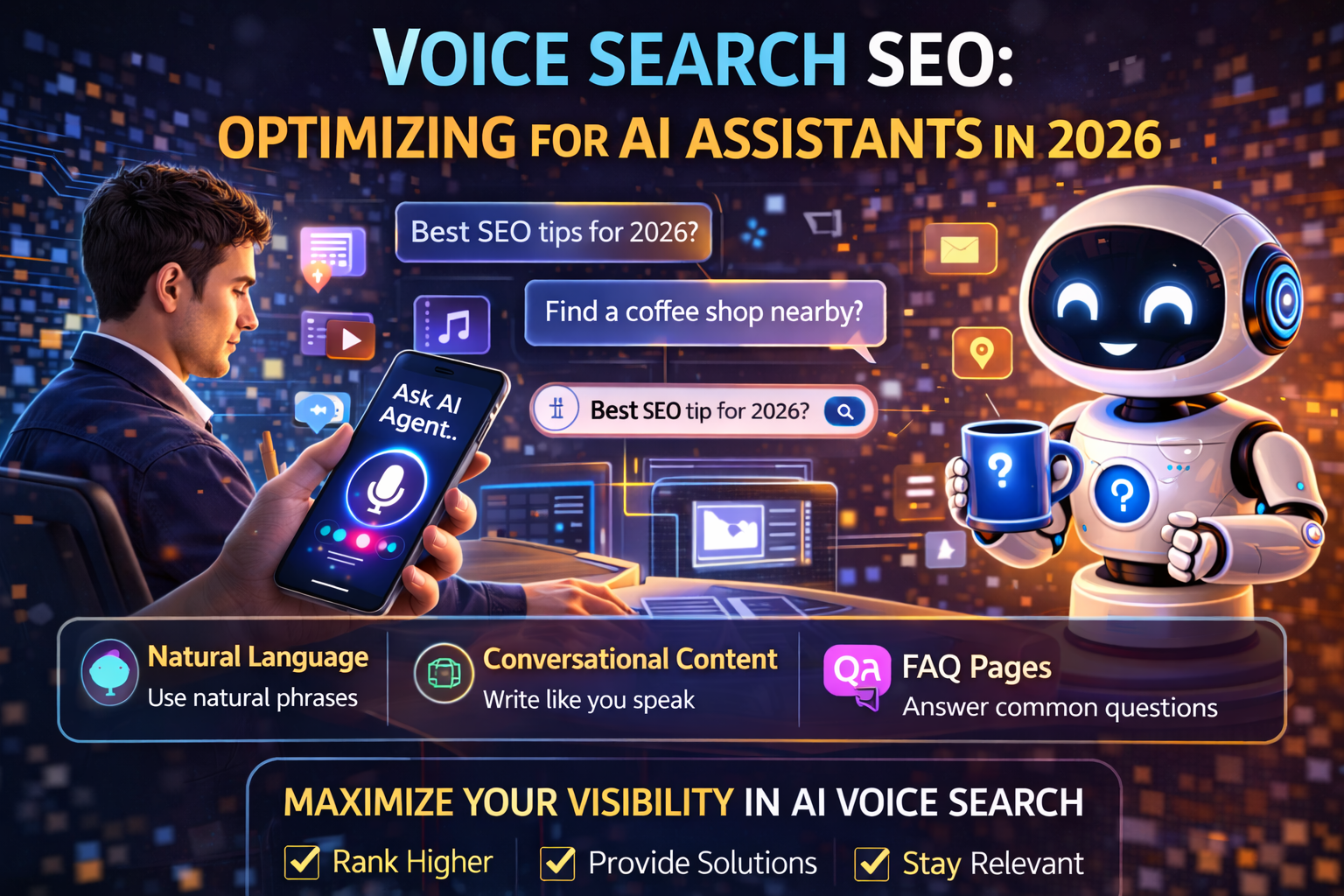
Voice search is no longer about asking a smart speaker for the weather. With the recent integration of LLMs into Siri, Google Assistant, and Alexa, voice queries have become highly conversational, complex, and action-oriented. Here's how you optimize your website so that AI read your content aloud to users.
💡 Quick Summary
- ✓Conversational Keyword Targeting: Stop targeting "NYC best pizza". Start targeting question-based queries like "where can I get highly rated gluten-free pizza near me right now?"
- ✓The Featured Snippet is Everything: Voice assistants typically only read the #1 result (the featured snippet). If you aren't in position zero, you don't exist in voice search.
- ✓Speakable Schema Markup: Use `Speakable` JSON-LD schema to tell AI assistants which paragraphs of text on your website they're allowed to read aloud.
The Shift to Conversational Tone
When people type, they use "caveman" English to save time: "weather tomorrow london".
When people speak to AI assistants, they use natural language: "Hey Siri, will I need an umbrella in London tomorrow morning?"
The first step in voice search SEO is updating your content to match natural, spoken language. use question-based headings (H2s and H3s) throughout your content, mapping directly to the "Who, What, Where, When, Why, and How" of your topic.
How AI Assistants Choose What to Read
AI assistants operate on a "Winner-Takes-All" model. Unlike a visual SERP where a user can scroll past the #1 result to click the #3 result, a voice assistant reads essentially One answer. If you're ranking #2, you get zero traffic.
To capture position zero, you must structure your content for immediate extraction. The ideal format is:
- The H2 is the exact question the user asks.
- The paragraph immediately following the H2 provides a direct, concise 40-50 word answer.
- The remainder of the section expands on the topic with deeper detail.
From what I've seen, the AI extracts the 40-50 word paragraph, reads it aloud, and cites your brand name as the source.
Implement Speakable Schema
Google originally introduced the Speakable schema property for news websites, but its adoption has expanded. This markup identifies sections of a web page that are best suited for audio playback via text-to-speech.
By adding JSON-LD `Speakable` tags to your key FAQs or summary paragraphs, you give a direct signal to Google Assistant and Apple Intelligence: "This is the exact text you should read when asked about this topic." Look at the FAQPage schema as well; when paired together, they create a highly optimized asset for voice indexation.
Capture the Voice Market
As screenless computing and smart glasses grow, voice queries will overtake text. Inovixa can map your site's content to conversational AI models, ensuring your brand is the default answer for Siri and Google Assistant.
Optimize for Voice SearchYour Voice Search Optimization Checklist
Voice Search SEO requires you to shift from short-tail keywords to natural conversation, and from chasing generic rankings to capturing position zero. That's it. Restructure your content with clear conversational headings, deliver immediate 50-word answers, and layer on technical schema to signal you're the brand the AI chooses to speak.