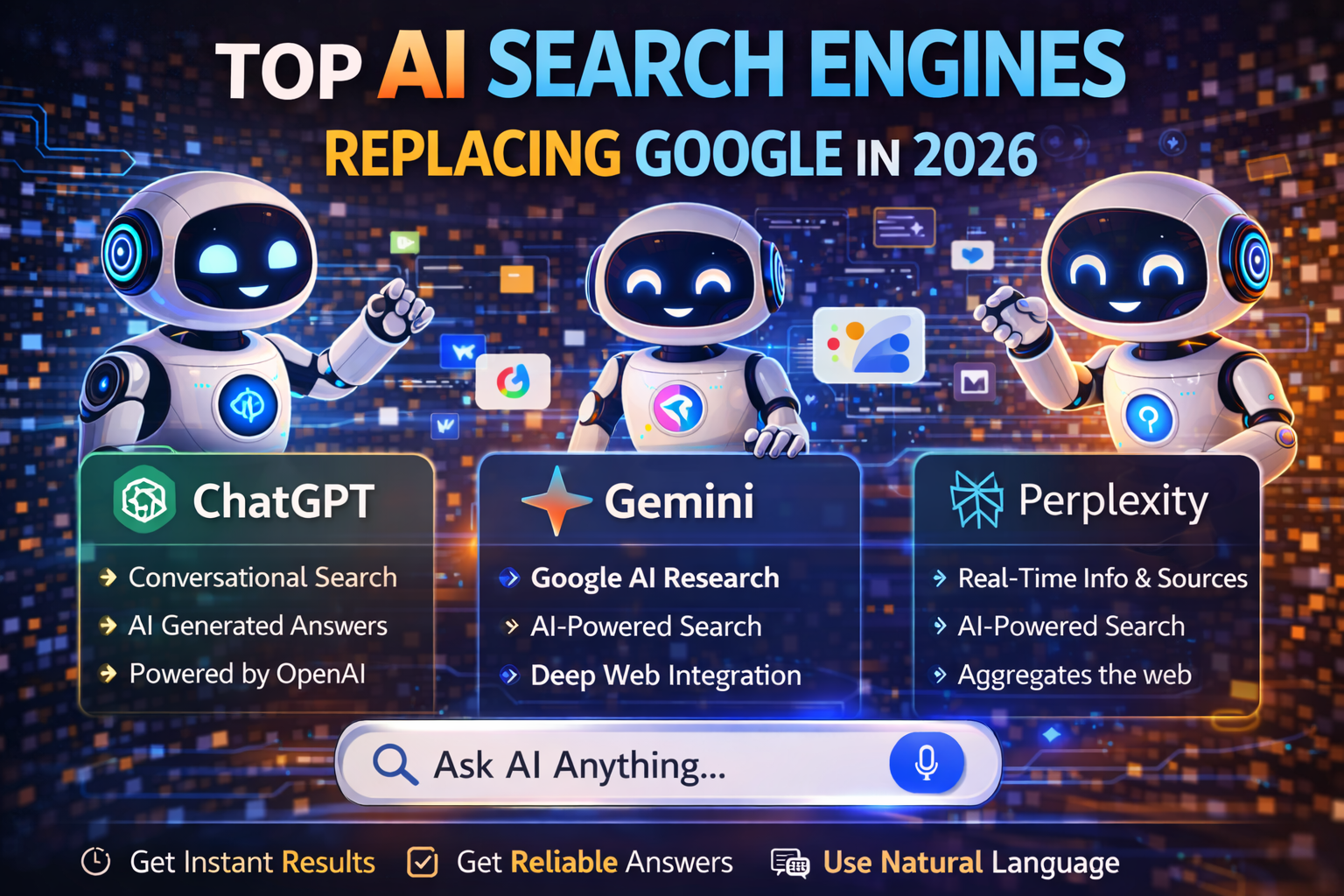
For over twenty years, "Googling it" was synonymous with "searching." Fast forward to 2026, and a new generation of users expects answers to be synthesized, rather than being handed a list of links. The AI search revolution is here, and a handful of platforms are eating into Google's historic monopoly.
💡 Quick Summary
- ✓The New Competitors: ChatGPT Search, Perplexity AI, and Microsoft Copilot are capturing large segments of the consumer search market.
- ✓Google's Response: Google Gemini (SGE) aims to keep users within the Google ecosystem by providing generative results at the top of the page.
- ✓Shift in Strategy: Businesses can no longer optimize for just one search engine. Multi-platform GEO readiness is a requirement.
Is Google Actually Losing Its Crown?
Yes and no. Google still dominates transactional, purely navigational queries. That said, for "top of the funnel" discovery queries—like researching a vacation, understanding a complex medical symptom, or comparing SaaS products—Google's market share has noticeably eroded. Users are migrating to platforms that offer direct answers free of affiliate bloat and paywalled articles.
1. Perplexity AI: The Researcher's Best Friend
What It Is: Perplexity was built from the ground up to be an "answer engine," not a chatbot. That's it. It's designed to act as a hyper-fast research assistant that reads live web pages and instantly creates a well-cited, academic-style response.
Why Users Love It: Every sentence Perplexity writes includes a footnote link to the original source. It's virtually immune to "hallucinations" because it largely adheres to the data it finds online.
2. ChatGPT Search (OpenAI)
What It Is: OpenAI successfully integrated live-web search directly into ChatGPT's interface.
Why Users Love It: It offers a smooth blend of conversational AI and real-time data. No joke. A user can ask ChatGPT to search for live sports scores, analyze a new company's offerings, and then immediately ask the model to draft an email based on those results, all without switching tabs.
3. Google Gemini / Search Generative Experience
What It Is: Google's answer to the AI threat is integrating its Gemini model directly into the traditional search results page.
Why Users Love It: It requires zero behavior change. Users still go to Google.com, but instead of clicking the first blue link, they read the AI-generated snapshot at the very top of the page.
4. Microsoft Copilot (formerly Bing Chat)
What It Is: Microsoft's integration of GPT-4 into Bing, deeply embedded into the Windows OS and Edge browser.
Why Users Love It: Copilot dominates the enterprise and B2B market. Because It's integrated into Windows computers and Microsoft 365, millions of office workers essentially use it as their default gateway to the internet.
The Rise of Specialized AI Search
Beyond the giants mentioned above, 2026 has seen an explosion of niche AI search engines:
- You.com: Highly customizable, allowing users to choose the underlying AI models (like Claude vs GPT).
- Consensus: An AI search engine specifically trained to only index peer-reviewed academic papers. It's the gold standard for medical and scientific queries.
- Phind: The go-to AI search engine for software developers, trained extensively on documentation and code repositories.
Become Visible Across All AI Platforms
Are you optimized only for Google? you're missing half the internet. Our GEO service optimizes your brand footprint so that ChatGPT, Perplexity, and Copilot recommend your business.
Start Your GEO StrategyThe Search Engine Market Has Fractured—What's Next?
The era of a single dominant search engine has ended. The market is now severely fragmented, with users pulling answers from ChatGPT, Perplexity, Copilot, and Gemini depending on their specific needs. Modern businesses must adapt by optimizing their digital assets to be trusted and cited across this new, diverse AI ecosystem.