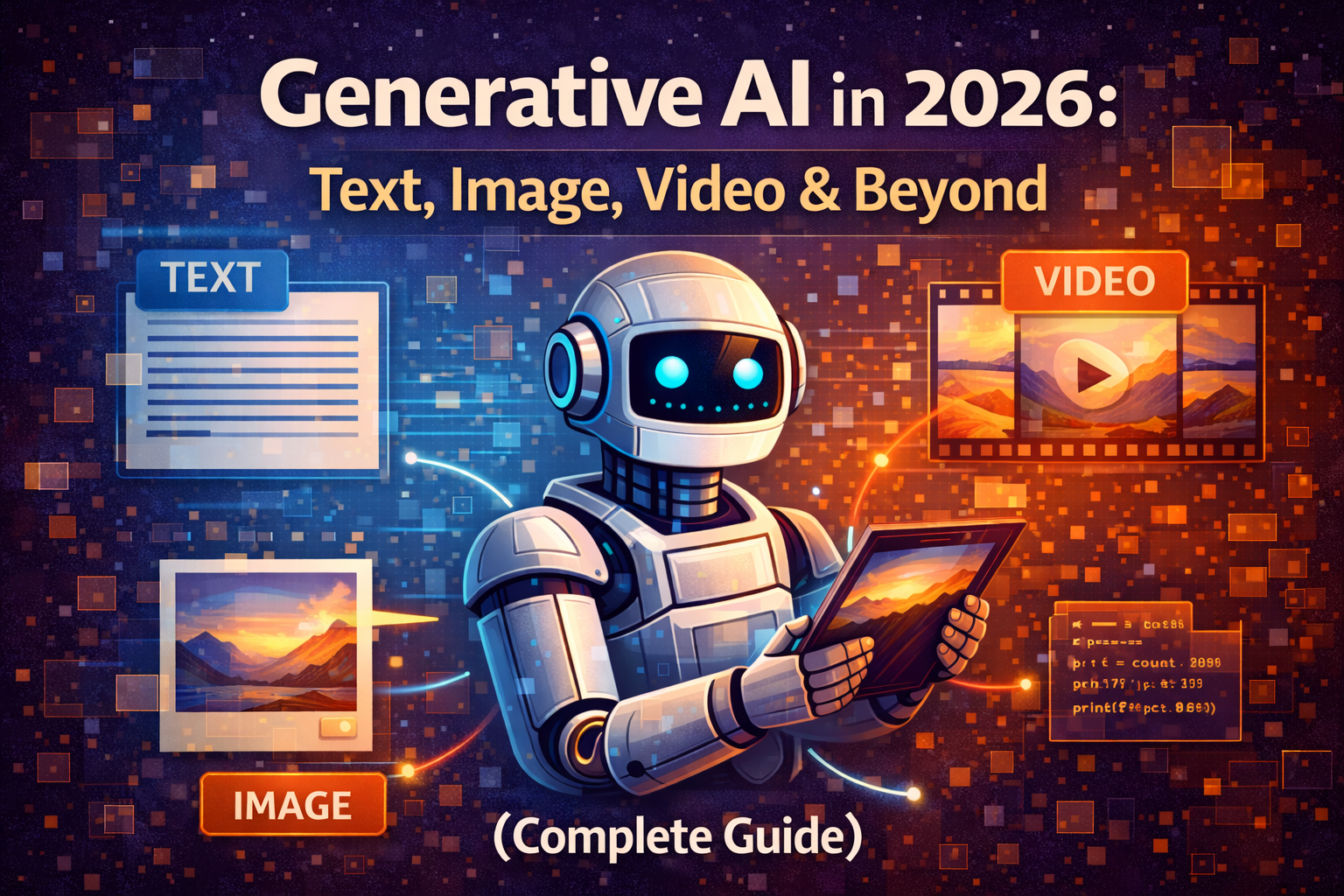
Welcome to the ultimate hub for understanding Generative AI in 2026. If you feel overwhelmed by the sheer daily avalanche of new AI tools, large software regulations, and industry warnings, you're most likely not alone. The digital world is fundamentally transforming underneath our feet. This full master pillar guide directly breaks down the whole generative ecosystem—from text and synthetic video to the ethical warfare surrounding deepfakes—and provides you with complete operational clarity on how to work through the new economy.
The Foundation: What essentially is Generative AI?
Unlike traditional search engines (like Google) that largely retrieved pre-existing information indexed on servers, Generative AI synthesizes new digital assets from scratch based directly on a large learned library of past training data.
This means that when you ask an algorithm for a picture of a "pink elephant drinking espresso in a cyberpunk cafe," It's not furiously searching the internet for that specific exact photo. That's it. It practically hallucinates and generates the pixels in real-time. To fully understand essentially how far apart this narrow generative technology is from ultimate Artificial General Intelligence, read: What's AGI? A Simple Beginner's Explanation.
The Four Pillars of the Generative Ecosystem
The tech industry is segmented into four large generative domains. we've thoroughly reviewed one of the best tools for each specific modality in our dedicated deep-dive guides linked largely below.
1. Generative Image Models
The ability to instantly generate highly complex, perfect photorealistic marketing assets has disrupted the advertising industry. Tools like Midjourney dominate artistic styles, while Adobe Firefly dominates corporate legal safety.
Read the full guide2. Generative Video Models
Software like OpenAI's Sora and Runway Gen-3 removed the necessity for physical camera crews by simulating detailed 3D physics, lighting, and camera movements directly from simple text prompts.
Read the full guide3. Generative Audio Models
From cloned human voiceovers (via ElevenLabs) to instantly synthesized Billboard-ready pop songs generated from scratch, AI has effectively hacked the global structural mechanics of human audio perception.
Read the full guide4. Text Models (LLMs)
Generative text engines fuel the whole backbone of modern search engine optimization, email marketing, and social media copywriting reliably today, automating weeks of human labor into seconds.
Read the full guideThe Dark Side: Legal Battles, Ethics, and Misinformation
This rare explosion of creative power did not happen within a safe ideological vacuum. Simple as that. The societal fallout has been complex globally.
-
The Legal Copyright Nightmare: Major corporations and independent artists are engaged in historic multi-billion dollar lawsuits against tech giants over stolen training data and output ownership. Read the legal breakdown →
-
Political Disinformation: State-funded agencies rapidly deploy fake explicit videos to swing global democratic elections. Read the threat profile →
-
Algorithmic Bias: If we strictly rely on AI to parse medical records and write loan approvals, the inherent racial and financial biases baked deeply into their training data effectively destroy lives. Read the dataset analysis →
Frequently Asked Questions
How fast is this technology improving?
From what I've seen, at an exponential, frankly rate. A model released largely today is practically obsolete essentially six months from now as engineers chase the ultimate final horizon. (Dive deeper into the ultimate final frontier: AI Superintelligence Explained).