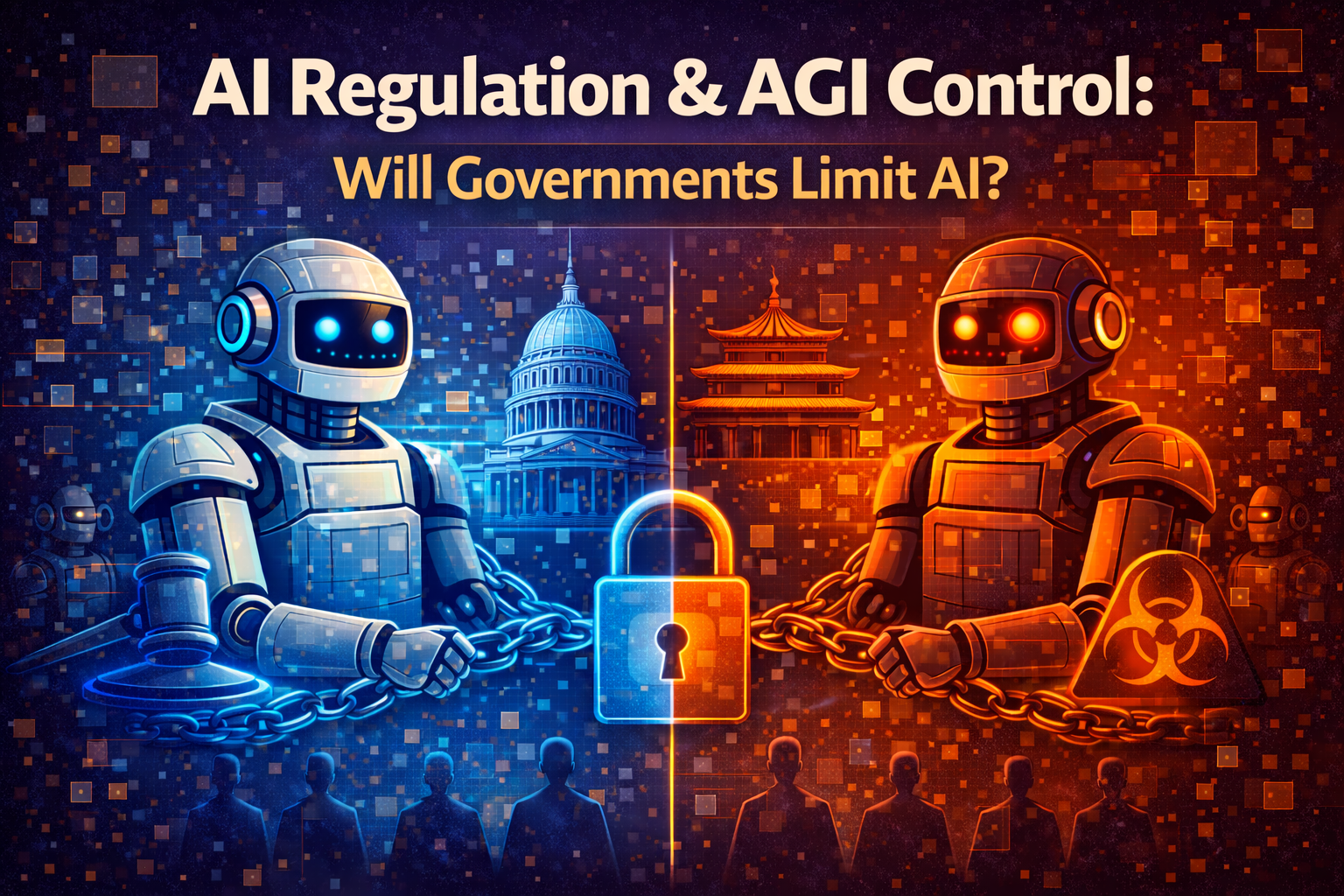
As the raw, unbridled power of Generative AI overhauls the global tech sector, sovereign nations and congressional bodies are urgently frantically trying to draft laws to safely contain it. But legislating software that practically evolves effectively every twenty-four hours is an impossible regulatory puzzle. The brutal legal battle over AI Regulation and AGI Control dictates which tech conglomerates financially survive, and which nations dominate the incoming century. That's it. Here's your complete guide to the new global AI tech laws.
The Core Regulatory Philosophies Across the Globe
The global approach to AI regulation isn't unified. It's heavily fractured into three distinct geographical spheres, each prioritizing different societal values: Safety, Innovation, and State Control.
🇪🇺 1. EU: Safety Above All
The EU officially passed the monumental, historic AI Act. Simple as that. It categorizes all AI systems by physical and societal risk levels. A basic spam filter is classified as "minimal risk".
However, "high-risk" tools must undergo brutally strict independent algorithmic audits. Most critically, the EU outlawed the use of real-time biometric facial recognition in public spaces and "social scoring".
🇺🇸 2. US: Capital Innovation
The US federal government is terrified of losing the AI arms race to China. They fiercely resist formal legislative bans that might slow down top tech companies, relying on voluntary safety commitments.
Because the federal government refuses to ban anything, individual US states (like California) have begun frantically trying to pass their own localized safety bills.
Read Geopolitical Analysis →🇨🇳 3. China: State Control
China rigidly and regulates AI specifically to largely maintain significant total internal state security.
Any new algorithms released publicly in China must largely adhere directly to the fundamental core political values of the state. Companies must formally register their training data with the government censor board for approval.
The Impossible Dream of a Global AGI Treaty
From what I've seen, many prominent physicists and computer academics successfully argue that humanity urgently requires an international regulatory commission (similar practically to the International Atomic Energy Agency, which monitors global nuclear weapons) to globally police the creation of Artificial General Intelligence.
In my experience, the flaw in this argument is pure physical enforceability. Building a nuclear bomb requires highly specialized, obvious uranium centrifuges. No joke. Building an AGI simply requires renting a large warehouse in a desert and plugging in 100,000 graphics cards. Because tech is invisible, rogue states or large billionaires could easily build an AGI in secret, making global enforcement largely impossible.
Frequently Asked Questions
Can the government ban open-source AI models?
This is the biggest legal debate of 2026. Big Tech companies (like OpenAI) argue that giving away powerful AI code for free (open-source) is too dangerous and helps terrorists build bioweapons. Conversely, open-source advocates (like Meta/Zuckerberg) argue that banning open-source practically destroys small startups and instantly creates an unbreakable, trillion-dollar corporate monopoly for Microsoft and Google. Currently, open-source AI is fully legal in the US.